Alcantara – What Is Alcantara Upholstery?
The choice of interior trim affects a vehicle’s prestige and value. Alcantara upholstery combines aesthetics with durability. Caring for this material properly requires dedicated products. The wrong car care products can irreversibly damage its microfiber structure.
Alcantara – What Is It and Where Does the Material Come From?
It is worth explaining what Alcantara is – a material we so often come across in luxury cars. It is an advanced synthetic material made from polyester and polyurethane, consisting of ultra-fine fibers that offer softness and resistance to damage.
The material made its automotive debut in the 1970s. Alcantara upholstery contains no components of animal origin. Drivers appreciate it for its excellent grip during dynamic driving. A luxurious finish is not everything – Alcantara fabric has built its reputation above all on comfort and the exceptional lateral support it gives occupants in their seats.
Is Alcantara Leather?
Calling Alcantara leather is a factual error, as the material has nothing in common with products of animal origin. Applying products meant for genuine leather to this particular nonwoven fabric can cause the microfibers to stick together irreversibly, resulting in a loss of elasticity and a noticeable decline in the overall look of the interior.
Analyzing the dilemma of choosing between Alcantara and leather reveals important technical differences, the most significant being Alcantara’s lower weight and the microfibers’ better resistance to UV radiation. Experts stress that choosing between upholstery types – leather or Alcantara – is essentially a choice between timeless elegance and advanced functionality.
Advantages of Alcantara Upholstery
Looking at reviews of Alcantara upholstery, it is easy to see how much importance users place on the thermal comfort it provides. It does not build up heat in summer or become uncomfortably cold in freezing temperatures, ensuring consistent thermal comfort. This is a major advantage for owners of cars without ventilated seats.
Key advantages:
- it keeps the driver’s body from sliding in sharp corners,
- the fibers stay durable with regular cleaning,
- pilling can be removed with dedicated tools,
- a wide color palette makes it easy to personalize any vehicle interior.
Alcantara upholstery’s high ratings also come from its durability. Without regular cleaning, however, the material becomes shiny and looks worn. Dirt and grease permanently damage the natural structure of modern microfibers.
Which Is Better for Everyday Use: Leather or Alcantara?
Whether leather or Alcantara is better depends on personal preference and how the car is used. Genuine leather is extremely practical for everyday care when you use the right dedicated care products, which allow dust to be removed safely and protect the surface. Whichever you choose, both materials need sand and dust removed regularly. These particles act like sharp abrasives, damaging both Alcantara fibers and the smooth surface of leather.
Alcantara is a choice justified above all by the need for better lateral support in the seats. The final decision on whether leather or Alcantara upholstery suits a particular car better must take into account how the vehicle will be used – keep in mind that spilled liquids soak into the fabric structure much faster than into treated leather.
Professional Cleaning and Care
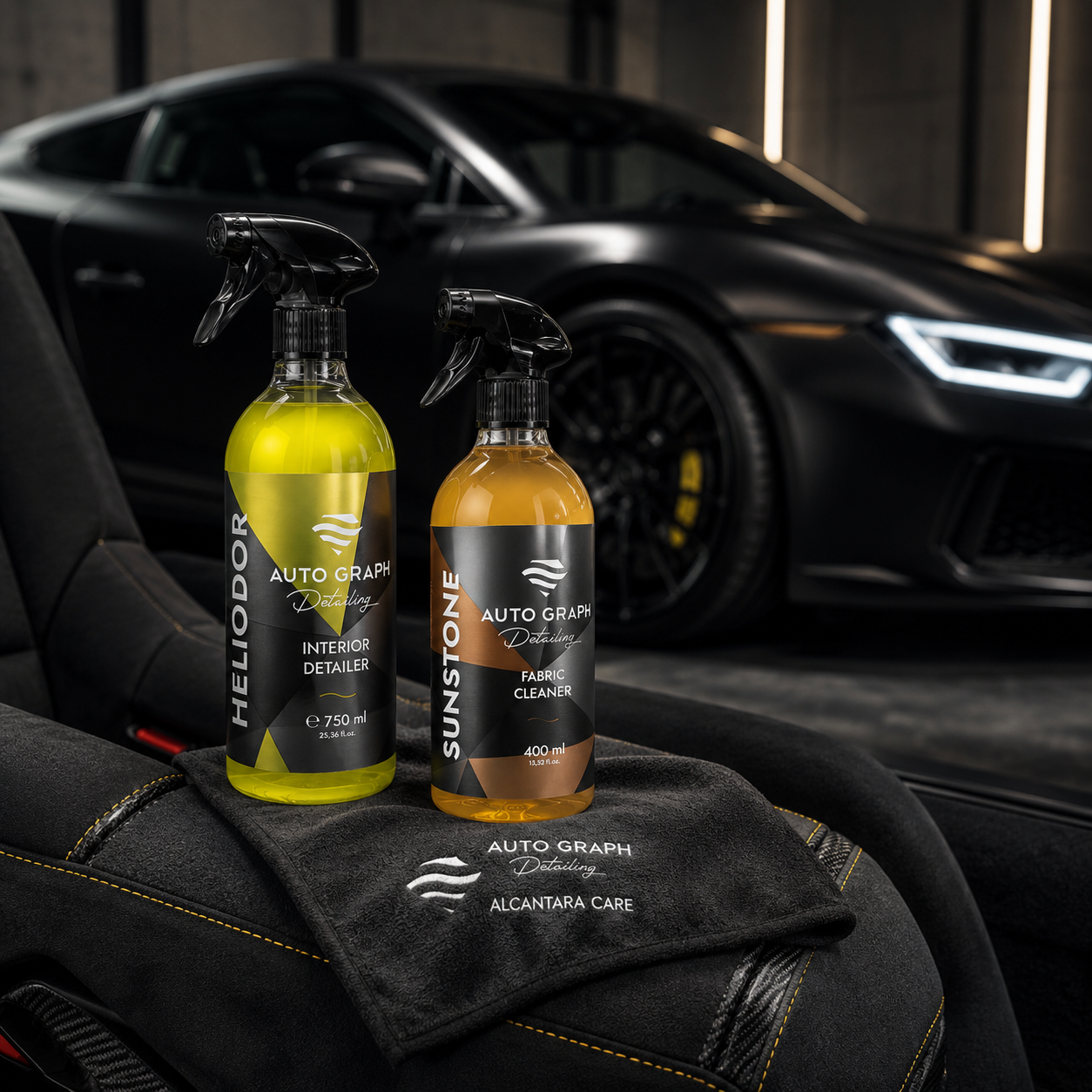
Keeping the interior in flawless condition requires regular, professional care. For everyday refreshing of the dashboard and all other elements (except the upholstery), HELIODOR INTERIOR CLEANER is the best choice. It effectively removes dirt and leaves a natural finish that does not need rinsing after use. For cleaning fabric upholstery and Alcantara, SUNSTONE FABRIC CLEANER is the dedicated solution.
When cleaning Alcantara, the main technique is extraction-style cleaning – cleaning the material by hand by lifting the dirt up off the fabric surface. A clean microfiber cloth or a dedicated mitt is essential for this, as it absorbs the dissolved contaminants.
Follow these technical steps:
- Vacuum the entire surface thoroughly, removing sand and loose contaminants.
- Apply SUNSTONE FABRIC CLEANER and continue cleaning the surface.
- Wipe the material with firm strokes, transferring the dirt onto the microfiber cloth.
- Avoid oversaturating the layer of foam beneath the fabric.
- Brush the damp fibers in one direction with a soft brush so they do not lie flat after drying.
- Remove stubborn stains with AMBER APC at a suitable dilution.
Remember to clean and protect any adjacent leather parts as well. Use NEPHELINE LEATHER CLEANER, then apply ALABASTER LEATHER Protect to keep the leather from cracking. ALABASTER moisturizes the leather and significantly extends its life.
Recommended products
- Sunstone- fabric surface cleaner
- TEXTIL WASH GT – cleaner for fabric upholstery, carpets and car interiors
- Leather cleaning brush
- Ewocar microfiber applicator (mitt)
See all products: Interior Cleaning. You can find the safety and product data sheets for every cleaning product on our safety data sheets page.
