Winter is the season when your car’s finish is in constant contact with salt, slush, and road chemicals, all of which do serious damage. Regular car washing in winter is the only effective way to prevent corrosion, a dull clear coat, and costly bodywork repairs down the road.
Many drivers worry about frozen seals or locks, but skipping care altogether is a mistake that can cause irreversible damage to the clear coat. The right technique and professional products make washing your car in cold temperatures a completely safe process, and an essential one for keeping your vehicle in excellent visual and technical condition.
Can you wash your car in winter?
It’s one of the most common questions drivers ask once temperatures drop below freezing. The short answer: yes! In fact, you should. Road salt and chemical contaminants are highly hygroscopic (they absorb moisture), creating the perfect environment for rust to form – even in freezing weather.
Doubts about washing a car in winter mostly come from the fear that seals and lock cylinders will freeze, or that windows might crack from hot water. These risks are real, but only if the job is done incorrectly.
When is it safe to wash your car?
Ideally, the temperature should be above 0°C. You can wash your car at 0°C or in a light frost (down to -5°C) as long as you dry the vehicle thoroughly. In a hard frost (-10°C and colder), it’s best to avoid washing outdoors with water unless you have access to a heated garage.
So, can you wash your car in winter? Yes – the key is proper preparation and fast-acting products that remove dirt without long dwell times.
How to wash a car in winter: a step-by-step process
Keep in mind that winter contaminants are a different challenge from summer ones, such as removing bugs from the bodywork. Winter brings greasy, heavy road grime saturated with salt and sand that clings tightly to the body. Rubbing this layer off directly with a sponge is risky, because hard particles trapped in the wash mitt or sponge act like sandpaper, causing countless micro-scratches and, as a result, visibly dull paint.
Everything starts with a touchless pre-wash.
- Chemical pre-wash: Apply a traffic film remover (TFR) to the cold paintwork. In winter, snow foam may be too weak for heavy salt deposits. Let the product work for about 2 minutes.
- Rinse: Rinse the car thoroughly with a pressure washer, flushing sand and salt out of the wheel arches and off the sills.
- Main wash: Only now, if conditions allow (a suitable temperature or a garage), can you move on to a hand wash.
Wondering how often to wash your car in winter? Experts recommend rinsing off the salt at least once a week, even if it’s just a quick pre-wash at a touchless car wash.
What to wash your car with in winter: professional car care products
Choosing the right products is crucial for keeping your paint in good condition. When picking professional car wash products, remember that what you wash your car with in winter isn’t just about looks – it’s also about the safety of the finish. Products need to be strong enough to handle aggressive salt, yet safe for any protective layer applied earlier. This is especially important if your car has a ceramic coating, which needs special care to keep its properties.
Dissolving salt and road grime
CITRINE Traffic Film Remover works best for removing heavy winter grime. It’s a highly concentrated product with an alkaline pH that effectively removes road film, greasy stains, and – most importantly in winter – salt stains. Thanks to its high concentration, you can adjust its strength to the conditions (1:10 for heavy soiling). It’s safe for bodywork, wheels, and tires.
It works perfectly as a pre-soak applied to the surface before you drive into the car wash. Washing the wheels.
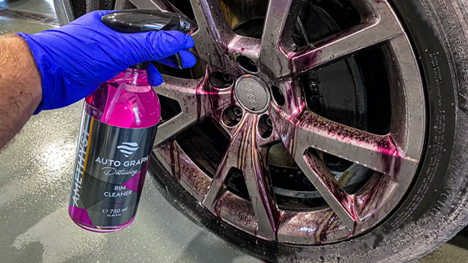
Wheels suffer the most in winter. For alloy wheels, use AMETHYST, a pH-neutral wheel cleaner. For steel wheels, which often get covered in a layer of rust and stubborn grime, the CITRINE TFR mentioned above is the better choice. Its formula does an excellent job of cleaning steel wheels and hubcaps.
Shampoo for special tasks
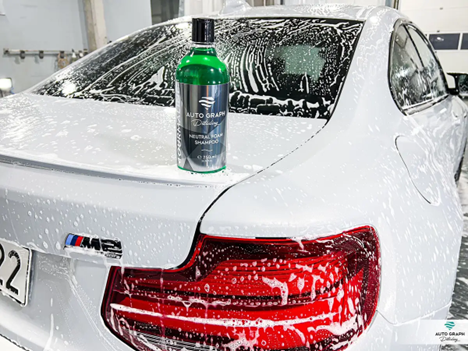
When you hand wash your car, a regular shampoo may not be enough. In winter, it pays to use ALEXANDRITE Organic Acid Shampoo, which has an acidic pH. Why does that matter? An acidic pH dissolves mineral deposits (salt and water spots) exceptionally well. It also “unclogs” ceramic coatings, restoring the hydrophobic properties that are often lost under a layer of winter grime.
Protection and drying
A winter car wash should finish with protection. The best choice for this is the indispensable SAPPHIRE ceramic spray wax. It creates a hydrophobic (water-repellent) protective layer, so the car gets dirty less. It makes drying easier – water runs off the paint faster, reducing the risk of droplets freezing.
It protects the paint from the harmful effects of salt.
Washing your car in winter at a self-service car wash
For most drivers, a winter car wash simply means a quick trip through a touchless car wash. It’s a safer option than an automatic car wash, whose brushes can grind sand into the paint. But touchless washes have their drawbacks, too.
How do you wash your car in winter at a self-service car wash?
- Bring your own chemicals: Before you insert a coin, spray the car with a CITRINE TFR solution. Car washes often use cheap micro-powders that don’t cut through the greasy winter film. Citrine dissolves the grime, so all you have to do is rinse it off.
- Skip the brush: The public brush at a car wash is a breeding ground for sand and grit from other cars’ wheels.
- Rinse thoroughly: Don’t skimp on the rinse program. Salt left in crevices is a source of corrosion.
- Final program: Always finish with the “spot-free” program (demineralized water). This prevents frozen water spots.
A winter car wash at a touchless car wash is effective if you treat it as a salt rinse rather than a full professional wash.

Washing your car in cold conditions – safety and risks
When the temperature drops below -10°C, water freezes almost instantly on contact with the surface. Washing your car is not recommended in these conditions. However, in a light frost down to -5°C, it’s worth following a few rules.
- Protect the seals: Before washing (or regularly throughout the season), it’s a good idea to treat the seals with silicone so the doors don’t freeze shut.
- Remove the water: If you can, use compressed air after washing to blow water out of the mirrors, door handles, and locks.
- Drying is essential: Don’t drive a wet car into freezing temperatures. Use an absorbent microfiber cloth. You can also use SAPPHIRE Ceramic Spray Coat, which is applied to a wet surface and speeds up water runoff. After applying it to the wet surface, simply buff it dry with a microfiber or absorbent cloth.
- Clean the windows: Washing your car in winter is also a safety issue. Clean windows fog up less. Use MALACHITE Glass Cleaner (evaporates instantly) or the hydrophobic EMERALD, which works like an invisible windshield wiper. Isopropyl alcohol is an interesting and useful product in winter conditions. AVENTURINE IPA Cleaner works great as a window de-icer and as a degreaser for wiper blades, which collect greasy residue in winter.
Recommended products
See all products: Car Bodywork, Winter and Summer Products. You can find the safety and product data sheets for every cleaning product on our safety data sheets page.
