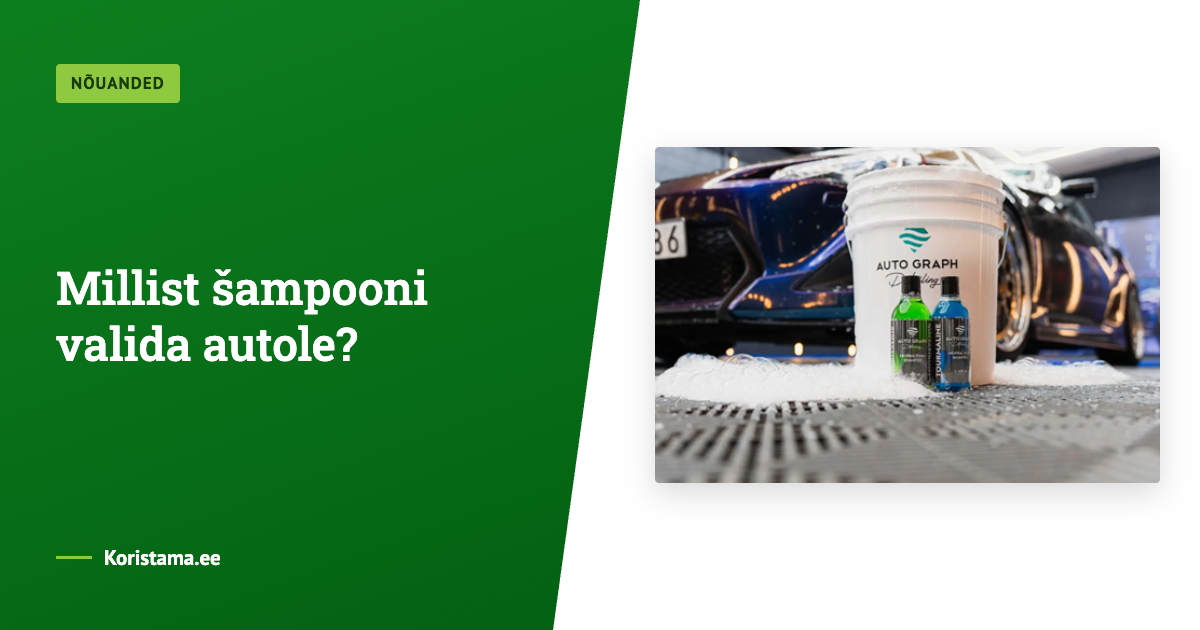
Proper paint care is the foundation of detailing, and hand washing is the most important stage of everyday vehicle maintenance. Many drivers treat it as trivial, but from a technical point of view, choosing professional products – that is, the right car care products – determines not only cleanliness but above all the safety of the paint. Using the wrong products can cause micro-scratches, dull the surface and degrade previously applied wax or ceramic coatings. Understanding the properties of the products on the market lets you make an informed decision about which car shampoo meets the highest standards, delivering optimal results without the risk of damage.
Selection Criteria: How Do You Choose a Car Shampoo Based on the Type of Dirt?
A fundamental mistake is confusing shampoo with pre-wash products. Shampoo is used for the actual (contact) wash, whereas heavier loose dirt, road salt or grease should be removed with a TFR, and heavier soiling on details and in crevices with an APC at the right concentration.
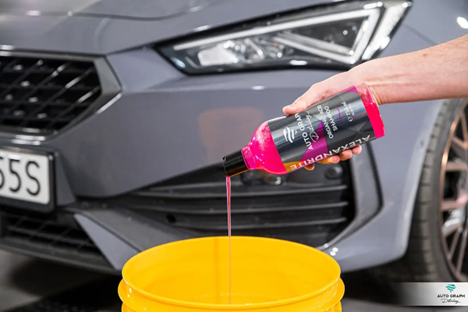
Before you start a hand wash, the paint is covered with a layer of heavy dirt. Removing it directly with a sponge or mitt, even with the best shampoo, works like sandpaper. That’s why, in professional detailing processes, it’s essential to use CITRINE before reaching for shampoo. It’s an advanced TFR that softens and effectively breaks down traffic film, preparing the surface for a safe contact wash. Only after the pre-wash product has been rinsed off should you consider which car wash shampoo to choose for the second stage. We distinguish three main categories of shampoo by pH: neutral shampoos (pH ~7) – safe for wax and seals. Ideal for regular maintenance of well-kept cars (e.g., TOURMALINE); acidic shampoos (with an acidic pH) – such as ALEXANDRITE, designed for cleaning ceramic coatings and removing mineral deposits; alkaline shampoos (high pH) – used less often, mainly for heavy-duty cleaning before paint correction.
What Should You Look for When Choosing a Car Shampoo?
When analyzing product data sheets, it helps to know what to look for when choosing a car shampoo so the job is both effective and safe. A key parameter, often more important than cleaning power itself, is lubricity. A high-quality shampoo creates a micro-layer between the mitt and the paint that reduces friction. This factor offers the greatest protection against so-called swirls (circular scratches) during mechanical contact.
Another important factor is the product’s concentration. Professional products are highly efficient. As a result, the cost per wash is often lower than with cheaper market alternatives that require much higher dosing. It’s also worth paying attention to how well the product rinses off. Shampoo must not leave streaks or residue, which is especially important in summer, when the body heats up faster.
User safety and the protection of “piano black” trim or chrome are another priority. Modern products are designed so that, despite their chemical effectiveness, they don’t dull delicate decorative details (provided you follow the manufacturer’s concentration recommendations).
What Should a Car Shampoo Contain?
Washing effectiveness depends directly on the chemical composition. When considering what a car shampoo should contain, look for a balance between surfactants (surface-active compounds) and conditioning additives. Surfactants are responsible for emulsifying dirt – they surround contaminant particles, allowing them to be safely lifted from the paint and rinsed away with water.
Modern detailing shampoos often also contain:
- corrosion inhibitors – protect metal body parts
- polymers and SiO₂ – in ceramic shampoos, these components bond to the paint, increasing its gloss and hydrophobicity,
- water softeners – prevent limescale from forming, which is especially important when washing your car with hard tap water.
Remember that rich foam is not an indicator of effectiveness. Although it helps the solution cling to vertical body panels, the safety of the wash depends primarily on its ability to penetrate dirt and on high lubricity. Although it helps keep the solution on vertical body parts, wash safety is determined mainly by the ability to penetrate dirt and by high slickness under the mitt.
How Do You Find the Best Car Wash Shampoo?
It’s impossible to identify the best car wash shampoo without defining the specific user’s needs. For someone whose car is protected with a ceramic coating, the priority is a slightly acidic product such as ALEXANDRITE. It effectively removes mineral deposits that “clog” the coating, restoring its original hydrophobicity.
For everyday maintenance of unprotected cars or vehicles with a natural wax coating, the best car shampoo is the neutral TOURMALINE. It delivers thick foam and excellent lubricity without damaging the protective layers on the surface.
Professional washing calls for an individual approach, which is why the type of shampoo is always matched to the needs of the existing paint. If the goal is deep cleaning, ALEXANDRITE is indispensable. If gentleness and wax safety are the priority, TOURMALINE is the way to go.
High-quality chemicals need the right technical support, which is why the two-bucket car wash method is crucial. One bucket holds the shampoo solution, the other holds clean water for rinsing the mitt. A grit guard installed at the bottom of the bucket is mandatory equipment – it traps sand at the bottom and keeps the mitt from picking it up again.
Which Shampoo Is Best for a Black Car?
Black and dark colors (metallic, pearl) are the most demanding to care for. Even the smallest scratches and water spots left by minerals are visible on their surface. That’s why the question “which shampoo should I choose for a black car” is entirely justified.
A product for dark paint must provide extreme lubricity to minimize the risk of so-called “holigrams” during a hand wash. TOURMALINE works excellently here because its formula reduces friction.
A safe shampoo for a black car is the foundation, but clean paint is only half the battle. For perfect results, you also need professional glass care products. EMERALD is ideal for this – an advanced liquid with an “invisible wiper” effect that not only cleans but also creates a hydrophobic coating that helps water run off in the rain.
Gray tires draw attention and spoil the impression of a perfectly clean body. That’s why, after drying the car, you should take a moment to apply ONYX to restore the tires’ factory shine. This product darkens the rubber, giving it a deep satin sheen, and protects it from browning.
The right detailing wash routine:
cooling down – never wash hot paint or a hot braking system; thermal shock can cause irreversible damage; pre-wash – apply CITRINE to dissolve road grime, then pressure rinse; main wash – hand wash using the “two-bucket” method with TOURMALINE shampoo (everyday maintenance) or ALEXANDRITE (cleaning ceramic-protected surfaces/heavier dirt);
safe drying – properly drying the car after washing, using a soft towel or a blower, is essential to avoid water spots; finishing – apply EMERALD to the glass and protect the tires with ONYX, which completes the whole process. Choosing car care chemicals wisely is an investment in your vehicle’s appearance.
A well-chosen shampoo not only cleans but also forms the first line of defense protecting your paint from environmental damage
Recommended Products
View all products: Car Bodywork. You can find the safety data sheet (SDS) and product data sheet for every cleaning product on our safety data sheets page.
