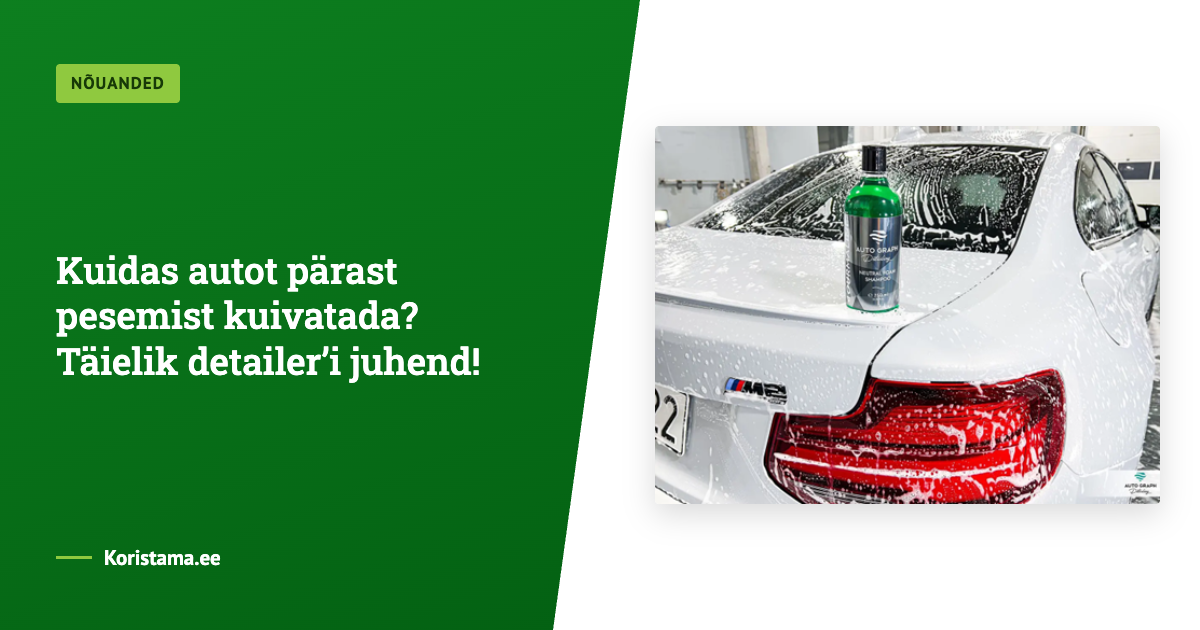
Leaving wet bodywork to air-dry is one of the most serious mistakes in the art of car care. Tap water, and often car wash water as well, contains minerals – mainly calcium and magnesium. As the water evaporates after rinsing, these compounds are deposited on the paint, creating stubborn deposits known in the industry as “water spots.” Even worse, water droplets act like lenses, concentrating sunlight, which on hot days can permanently damage the protective layer.
That’s why knowing how to dry your car after washing is just as important as knowing how to choose the right chemicals. When choosing professional car wash products, remember that the care process doesn’t end with the wash.
Why is drying your car thoroughly so important?
Proper car drying is the step that determines the vehicle’s final appearance and the safety of the paint. Moisture left on the surface seeps into micro-cracks, which over time can accelerate corrosion at critical points on the body, such as the lower edges of the doors, areas around the seals, or recesses in the trunk.
Detailers point to two main risks of skipping this step:
Mineral deposits: as hard water evaporates, it leaves white, round spots. If they aren’t removed, they can harden over time and permanently damage the paint. To prevent this and safely dissolve deposits without polishing, use the specialized product Lazurite;
streaks – water dripping from mirrors or door handles after washing spoils the finish and attracts dust. When looking at why thorough car drying matters, it’s also worth mentioning surface prep for the next treatments. Applying wax to a damp or wet surface is ineffective and prevents the product from bonding to the base layer.
What to use to dry your car: an overview of tools
Choosing the right accessories is crucial to avoiding “swirls” – circular micro-scratches that show up in sunlight. Chamois (natural or synthetic), popular for years, doesn’t meet today’s standards. Its flat structure offers no safety margin – it can’t trap any grains of sand that may have been left after washing. In that case, using a chamois is like rubbing the paint with sandpaper.
Today, the gold standard for drying a car is microfiber towels with the right weight and weave. There are two leading types:
Twisted loop – towels with twisted fibers, known for their exceptional absorbency and glide. Waffle weave – towels with a waffle structure, designed for windows, where the structure allows perfect, streak-free drying.
When deciding what to dry your car with, look for products weighing more than 500 GSM (grams per square meter). The higher the weight and the softer the fibers, the greater the safety margin for your paint. Plush microfiber can trap stray particles deep in the material, significantly reducing the risk of them contacting the paint compared with flat materials.
Surface preparation: the role of pre-wash and shampoo
Despite the safety margin that microfiber provides, you need to be aware that even the best towel will cause damage if the wash isn’t done perfectly. During drying, the biggest enemy isn’t the water itself but road grime and grains of sand. Dragging a towel over an improperly washed surface is a guaranteed way to get scratches.
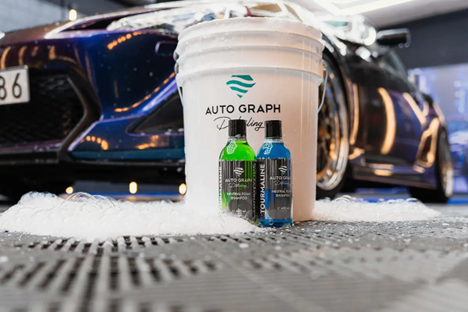
To minimize this risk, it’s crucial to use an effective pre-wash product. A product like CITRINE Traffic Film Remover (TFR) effectively dissolves heavy contaminants. For hard-to-reach details, recesses, or seals, it’s worth using an APC (such as the strong Amber concentrate), which removes greasy contaminants. Only after rinsing off the pre-wash chemicals do we move on to the hand wash. This is where the question often comes up: which car shampoo should you choose?
For regular maintenance and cars without protection, the pH-neutral Tourmaline is ideal.
If the car has a ceramic coating that needs “unclogging,” or is heavily soiled, choose the acidic Alexandrite shampoo. Remember that for complete safety, the two-bucket car wash method is always recommended – it’s the absolute foundation that ensures the surface you’ll dry later is free of aggressive solid particles.
How to dry your car after washing
Choosing the right products is critical to keeping your paint in good condition. Beyond that, how you handle the towel is just as important as its quality. Drying your car properly after washing should be done in the shade, on cool paintwork. There are two main methods of working with a microfiber towel:
Blotting method – the towel is laid on the wet surface (such as the hood), pressed down lightly by hand, and then lifted; this is the safest method for soft paints because it eliminates any sliding motion. Dragging method – the towel is laid out and held by just two corners, then slowly pulled across the surface without any extra rubbing. The weight of the water-soaked microfiber itself is enough to dry the surface.
The key to drying a car successfully is to start at the top (the roof) and gradually work your way down. This keeps water from running onto surfaces you’ve already dried.
How to dry your car quickly: touchless methods
On curved body panels, grilles, tight wheel spokes, and gaps around the mirrors, a towel may not be enough. This is where technology helps. The answer to how to dry your car quickly in hard-to-reach places is a car detailing blower.
A warm, filtered stream of air blows water out of crevices, preventing annoying streaks later on. This method is especially recommended for drying wheels (which you cleaned beforehand with a product like Amethyst), door jambs, and the engine bay. However, keep in mind that a regular workshop compressor without an oil filter shouldn’t be used, as it can leave oily particles on the clean surface.
After drying – protection and shine
Once the body is thoroughly dry, the true condition of the exterior plastics and paint becomes visible. Water hides imperfections well, but a dry surface mercilessly reveals the effects of UV radiation. That’s why no guide to drying your car after washing would be complete without mentioning waxing.
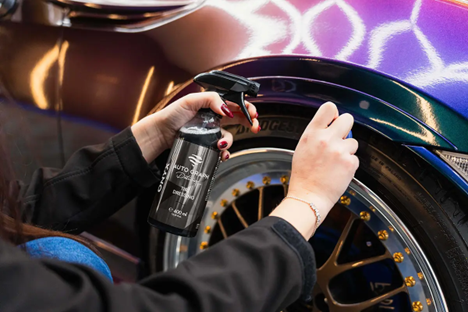
- Exterior plastics and tires: Onyx is the ideal product for restoring a deep black color to tires, exterior plastics, and seals. Thanks to its SiO2 content, it creates a hydrophobic coating that protects rubber and plastic from dirt and aging.
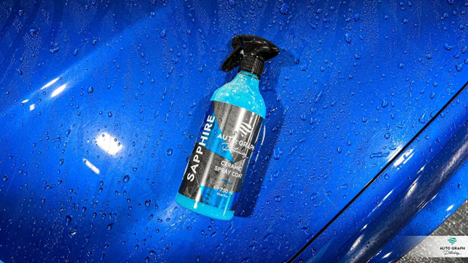
- Paint: To give the paint its final finish, achieve the so-called “wet look,” and make future drying easier, it’s worth applying Sapphire Ceramic Spray Coat. It leaves an incredibly slick, glossy surface and acts as the “icing on the cake” for the whole washing process.
Recommended products
- Drying towel 81x45cm (780 gsm)
- Koala car drying towel 50×70
- Car drying towel, Orange
- CORAL 400ml – quick detailer
See all products: Koala Car Care, Washing Accessories. You can find the safety and product data sheets for every cleaning product on our safety data sheets page.
