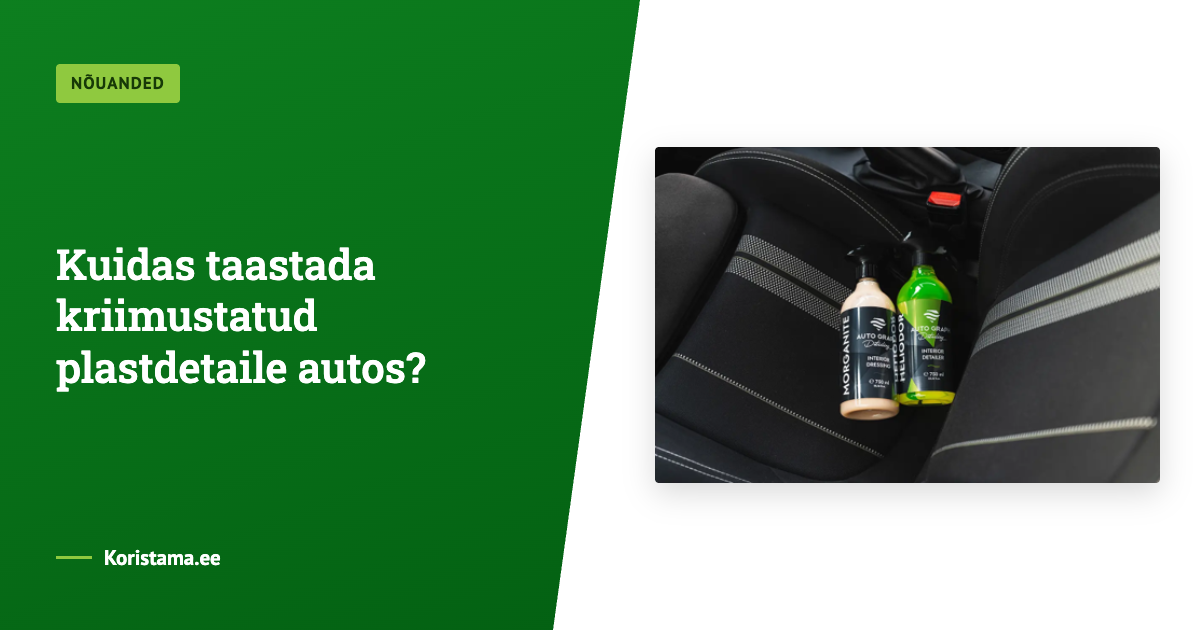
The look of your car’s interior has a direct impact on driving comfort and on the vehicle’s market value. Mechanical damage to the dashboard, center console, or door panels is a natural result of everyday use. Scratches are caused by contact with keys, jewelry, or luggage, among other things. Professional detailing offers effective restoration methods that bring these parts back to their original appearance – without the need for costly replacement. Knowing how to restore scratched plastics in your car lets you keep that showroom condition for many years.
Scratched Car Plastics – Diagnosing the Problem
Repairing scratched car plastics effectively requires an accurate assessment of the material type and the depth of the damage. Manufacturers use materials of varying hardness and texture. On hard, scratch-prone plastics, damage often shows up as white discoloration along the scratch. Soft materials, such as those used on the upper parts of the dashboard, are prone to dents and tears.
Superficially scratched car plastic can usually be concealed with special dressings. Deep gouges that damage the structure of the material call for more advanced techniques, such as sanding or heat treatment. The right diagnosis determines your choice of chemicals and tools, which is crucial to the final result. If you are not careful, using the wrong method can permanently damage the texture of the part.
How to Repair Scratched Car Plastic
The plastic restoration process consists of several key stages. Each one plays an important role in achieving a lasting result.
- Thorough Surface Cleaning
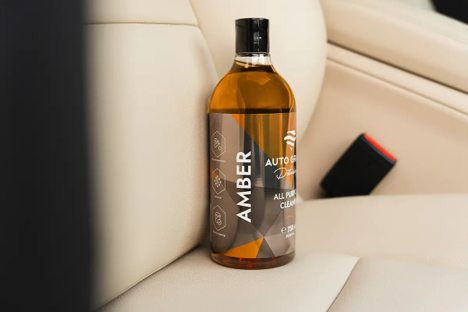
Dirt, dust, and residue from previously used care products make it impossible to judge the true extent of the damage. That is why the surface must be cleaned thoroughly before any repair work begins. A concentrated APC (all-purpose cleaner) such as AMBER is the best choice for this. Its alkaline pH deals effectively with grease and other types of dirt. The product needs to be diluted with water, typically to a 10% concentration. Work the product in with a brush, reaching into the recesses of the plastic’s texture. Then wipe away the loosened dirt with a damp microfiber cloth and rinse off any chemical residue. A professional APC is an essential tool in every detailing studio.
- Concealing Damage and Nourishing the Plastic
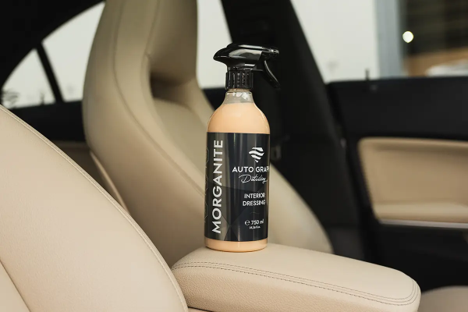
For superficial damage, the best solution is to apply a dressing that darkens the plastic and visually hides the scratches. MORGANITE is an excellent choice for this. It is an interior dressing that not only cares for surfaces but also creates an antistatic layer. Its formula penetrates micro-damage, deepens the color, and leaves an elegant satin finish.
Applying the dressing is easy and safe for most interior trim materials. Apply the product to a microfiber cloth and spread it evenly over the part you want to restore. MORGANITE makes white discoloration disappear and restores an even look to the plastic’s texture. It is a proven solution for scratched plastics, as long as the damage is not deep. Regularly cleaning your car’s plastics and applying the dressing will keep the effect going for a long time.
The Best Solution for Deeply Scratched Car Plastic
Deep damage requires intervention in the structure of the material. Professionals use a thermal method with a heat gun. Heating the plastic softens it slightly, allowing the scratch to close up. This technique requires considerable experience. Overheating the part causes irreversible melting of the texture and leaves shiny spots.
An alternative to the thermal method is to use texture paints, which fill in the damage and recreate the dashboard’s original grain. Keep in mind, however, that this is an advanced fix for scratched car plastic. For DIY use, the safest approach is to focus on thorough cleaning and regular care of the materials.
How to Prevent Scratches on Car Plastic Trim
Preventing scratches is much easier than removing them. Exposure to UV radiation and temperature swings makes plastic lose its elasticity, leaving it more vulnerable to damage. Dried-out plastic parts crack and scratch far more easily than those that are cared for regularly.
Regular Care and Protection of Car Plastic Trim
Using HELIODOR and other interior cleaners is the foundation of everyday plastic trim care. This product cleans and conditions surfaces at the same time, leaving a natural finish. Its antistatic properties reduce dust buildup, which lowers the risk of micro-scratches when you wipe down the dashboard. HELIODOR works great on plastic and wood trim and even on LCD screens.
It pays to invest in quality car care products that are safe for delicate interior materials. Avoiding harsh household chemicals prevents the polymers in the plastic’s structure from breaking down.
The Right Interior Cleaning Technique
How you clean your car’s interior matters a great deal. Using rough sponges or dirty cloths is the fastest way to damage smooth surfaces such as glossy black trim. Always use clean, soft microfiber cloths designed for cleaning car interiors. Apply products to the cloth rather than directly to the surface to avoid streaks and stains on adjacent materials.
When choosing interior cleaning products for your car, pay attention to their protective properties. Products containing UV filters and moisturizing ingredients, such as MORGANITE or ALABASTER (for leather), extend the life of the materials. As a result, scratched interior plastic becomes a much less frequent problem.
Restore or Conceal – What to Use on Scratched Car Plastics?
The choice of method depends on your expectations and budget. Replacing the part with a new one is a last resort and the most expensive option. For most drivers, thorough detailing delivers a satisfying result. If you are wondering what to reach for first with scratched car plastics, the answer is a high-quality dressing.
Instant Visual Results
Applying MORGANITE instantly improves the look of your interior. The product’s ingredients penetrate dull areas, restoring depth of color. It is an excellent solution for scratched plastics that spoil the look of door panels or door sills. The satin finish gives the interior a fresh, well-kept appearance. A good plastic dressing belongs in the kit of every car-conscious driver.
How Long the Results Last
The concealing effect lasts for several weeks, provided that suitable products are used for regular cleaning. Harsh cleaners can wash away the protective layer and make the defects visible again. That is why you should use gentle HELIODOR for dusting, as it does not damage the previously applied protective layer.
If you are thinking about refreshing scratched plastic surfaces in your car, remember that consistency is key. Regular use of care products not only hides existing defects but also makes the material more flexible. This makes the surface more resistant to accidental knocks, abrasion, and scratches.
People looking for an answer to how to restore scratched plastic often overlook how important proper surface preparation is. Applying a dressing to dirty plastic gives a short-lived and unsatisfying result. Only a combination of thorough cleaning and deep cleaning delivers a satisfying transformation. Remember that a well-kept interior is not just about looks – it also means a higher resale value for your vehicle. So it is worth taking the time to care for your dashboard properly if you want your car to stay in excellent condition.
Recommended Products
- MORGANITE – INTERIOR DRESSING
- HELIODOR – INTERIOR DETAILER
- Cockpit Care
- Ewocar microfiber applicator mitt
View all products: Interior Cleaning, Auto Graph. You can find the safety data sheet (SDS) and product data sheet for every cleaning product on our safety data sheets page.
