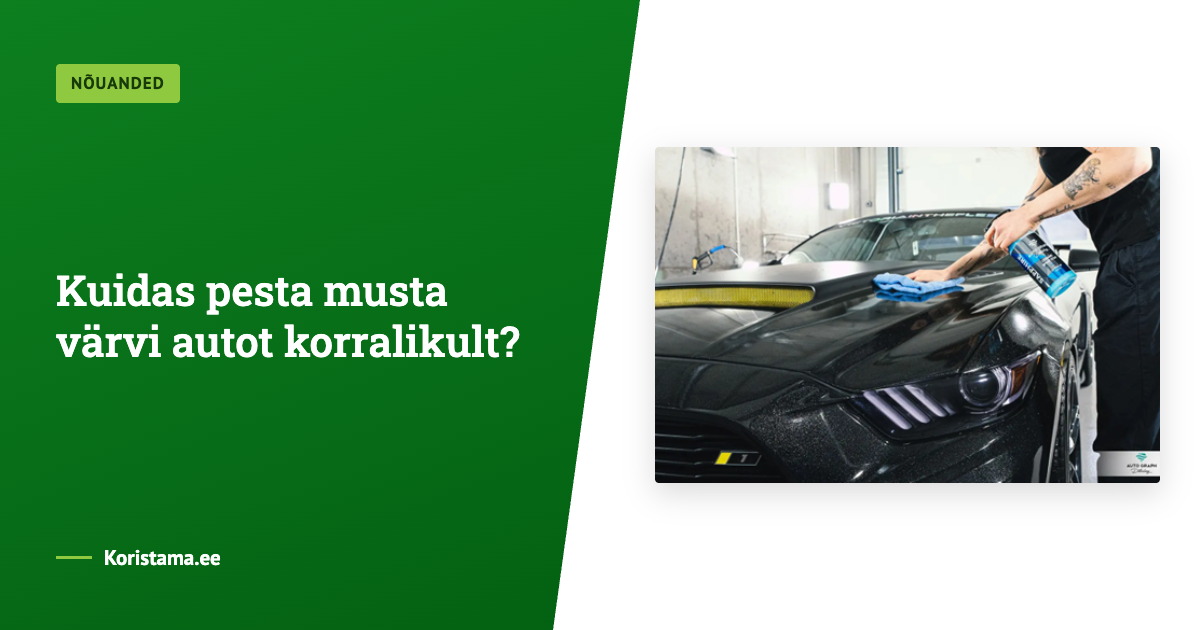
Black paint mercilessly reveals every flaw. Dust, road grime and especially washing mistakes become visible as soon as the car dries. Keeping a finish like this in flawless condition takes not only discipline but also an understanding of what happens on the surface of the paint. The right technique and the right chemicals are the only way to avoid micro-scratches and mineral deposits.
The Nature of Black Paint: How Do You Wash a Black Car Safely?
Dark colors absorb solar radiation far more intensely than light shades. This makes the body heat up quickly, which is the main risk during any care routine.
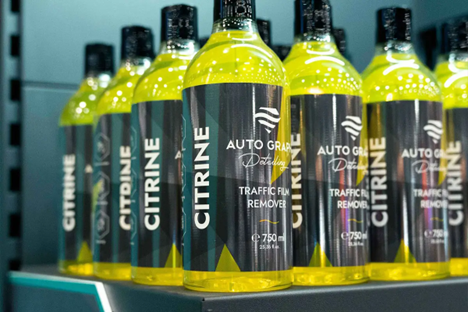
Knowing how to wash a black car starts with controlling temperature. When chemicals are applied to a hot surface, the water and detergent evaporate instantly, which leads directly to permanent discoloration. The foundation of safe care is working in the shade and only on cooled paint. Before the hand wash (with a sponge or mitt), a pre-soak is essential. This is an absolute must, because on a black surface every grain of sand leaves a permanent and clearly visible mark. To minimize the risk of scratching, use a pre-wash such as CITRINE. This product effectively loosens road film, grease and heavy dirt so it can be rinsed away touch-free before the main wash.
Chemicals and Tools: What Should You Wash a Black Car With?
Your choice of tools determines the safety of the paint. When deciding what to wash a black car with, skip stiff brushes and worn-out sponges. Professional detailing relies on gentle microfiber or wool mitts and the two-bucket method (one with shampoo, the other with clean water for rinsing the mitt). Grit guards at the bottom of the bucket are essential here to keep sand separated from the wash solution. The previously mentioned CITRINE acts as a safety check at this stage. Its alkaline pH formula can remove contaminants that water pressure alone cannot. Only after the pre-wash chemicals have been rinsed off should you move on to the main wash. While washing, remember to rinse the mitt frequently to remove accumulated dirt. This is necessary to avoid spreading abrasive particles across the body, which on black cars is a direct cause of permanent paint damage.
Hand Washing a Black Car – the Most Important Rules
When thinking about how to wash a black car properly, rule out circular motions, which create the characteristic “spider webs” when dirt gets trapped in the mitt. Professionals use straight-line motions (so-called cross-hatching), which reduces the visibility of micro-damage in the light.
Washing should start at the top of the car (roof, windows) and work downward, following the principle of gravity. The lower parts of the car, such as the rocker panels and bumpers, collect the heaviest contaminants, so using a separate mitt or sponge for them is strongly recommended. This keeps sand and road particles from being transferred back onto more delicate surfaces. Also remember to rinse the mitt thoroughly and often after each panel, and to keep the shampoo from drying on the paint.
Drying and Details
The biggest challenge for owners of dark vehicles is hard water. Leaving the car to dry “in the sun” guarantees water spots that are difficult to remove. The key to washing a black car without streaks is fast and effective drying.
You can use absorbent, “plush” microfiber towels or leaf blowers that blast water out of crevices (mirrors, door handles). Don’t rub the paint – lay the towel on the wet surface and gently glide it across or “pat” it dry.
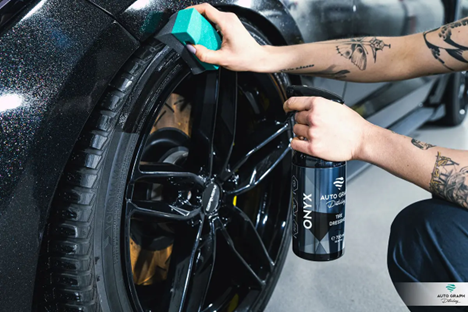
Flawless black paint contrasts harshly with faded gray plastics, ruining the overall look. To complete the care routine, finish by applying a dressing to the tires and exterior plastics. The satin finish on these details perfectly complements the depth of the paint, giving the vehicle a true show-car look.
Emergencies: How Do You Wash a Black Car at a Touchless Car Wash?
For black cars, automatic car washes are a death sentence – aggressive brushes quickly damage the surface. Touchless car washes remain the alternative, but using them also requires awareness. The biggest risk here is programs with so-called micro-powder. Under high pressure, its particles hit the body with the force of a sandblaster, acting like sandpaper on delicate paint.
At a touchless car wash, focus on rinsing the vehicle properly and, if the facility’s rules allow it, use your own pre-wash (CITRINE) before rinsing. But the most important step is the final program – rinsing with demineralized water (often labeled “shine”). Only mineral-free water lets the car dry without white deposits when you can’t dry it by hand.
Caring for a black car should be treated as a strict process with no room for shortcuts. Precision, the right chemicals, a gentle touch and speed are what guarantee success.
Recommended Products
- Neutro car shampoo
- Merino wool car wash mitt
- Drying towel 81x45cm (780 gsm)
- SAPPHIRE- CERAMIC SPRAY COAT
View all products: Car Bodywork, Washing Accessories. You can find the safety data sheet (SDS) and product data sheet for every cleaning product on our safety data sheets page.
