
You open the hood to top up the washer fluid and notice dust, mud or greasy stains. At this point, many drivers deliberately leave the engine bay dirty. The reason is simple: they’re afraid of flooding the electronics. That’s a mistake. A clean engine bay isn’t just about looks. It means better heat dissipation and makes it easier to spot potential leaks. Is engine washing safe? Yes – provided you do it sensibly, use professional chemicals and follow strict safety rules. In this guide, we’ll walk you through the process step by step.
Can You Wash a Car Engine? Facts and Myths
Many drivers worry about damaging their car while cleaning the engine. Contrary to these concerns, washing an engine is a safe procedure as long as you approach it with proper care.
Modern cars have increasingly well-protected electrical systems (so-called sealed connectors), which in theory makes washing the engine easier. Still, the biggest enemies of electronic systems are high water pressure and harsh, unsuitable chemicals.
Before washing the engine, assess the condition of its components. If you see damaged wiring, exposed cables or cracked fuse box covers, skip it or leave the job to a professional. If everything looks fine, you can proceed. Remember: safety comes first. Your goal is to remove dirt, not to force water where it shouldn’t go.
What Should You Use to Clean Oil and Mud Off an Engine?
Many car owners make the mistake of combining DIY car care with random cleaning products. Using dish soap, vinegar or general-purpose solvents is a false economy that can cause aluminum oxidation, bolt corrosion and the deterioration of other vehicle components. Chemicals designed for the engine bay differ from kitchen products in that they are ruthless on grease yet safe for plastic and rubber. It’s worth investing in professional car cleaning products rather than exposing your car to the costly consequences of misguided savings.
To tackle greasy grime, grease and road film, you need a product with strong cleaning power that is still safe for delicate components. The ideal solution is AMBER APC. It is a concentrated multi-purpose product (All Purpose Cleaner) that, once properly diluted, effectively penetrates contaminants.
Why Choose AMBER APC?
It effectively dissolves oil and road grime while remaining safe for surfaces.
It lets you adjust its strength – choose the right concentration for the level of soiling. Safe for metal, plastic and rubber components. If you’re wondering what to use to wash a car engine effectively, choose proven chemicals instead of experimenting with unsuitable substances.
How to Wash a Car Engine Step by Step
Here is a proven engine washing procedure that ensures a safe start-up and restores a spotless look to the engine bay. Let the engine cool down. This is the most important rule. Washing a hot engine can cause irreversible damage to the cylinder head (thermal shock) and make the chemicals dry instantly, leaving etching marks. The metal should feel cool to the touch.
Protect sensitive components. Use foil and painter’s tape to tightly cover the alternator, fuse box, air intake (if exposed) and any visible electrical connections.
Apply the chemicals. For heavy, greasy dirt, don’t start with water. It can dilute the product or prevent it from reaching the dirt. The best results come from spraying AMBER APC directly onto the dry engine. Spray enough of the diluted product onto the cooled engine bay to cover the surface, let it work for 2-3 minutes, but don’t let it dry.
Brushing. In heavily soiled areas, agitate the dirt with a detailing brush. Precision is the secret. Rinsing. Rinse off the chemicals with low-pressure water. Use a garden hose or the mist setting of a pressure washer from a good distance. Avoid aiming the water jet directly at the wiring! Drying. This step is often skipped, but it’s essential. Blow the water out with compressed air or a leaf blower. Finally, remove the foil protection.
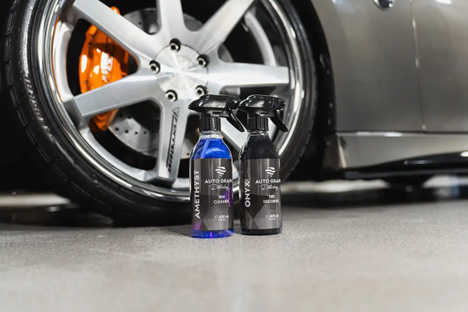
For a perfect finish, apply ONYX dressing to the dry plastic and rubber parts. Although this product is designed for tires, it also works great in the engine bay, darkening parts, giving them a satin finish and protecting them from aging.
Can You Wash an Engine at a Self-Service Car Wash?
Some drivers wonder whether they can wash the engine at a self-service car wash. Although it is theoretically allowed at a typical self-service car wash, we still recommend that amateurs avoid this option for engines. Self-service car washes usually deliver very high pressure that can’t be adjusted. If you hold the wand too close, it can cut through old seals, force water into the spark plug wells or damage the hood insulation. In addition, the car is often already warmed up by the time you reach the car wash. And as you already know, washing a hot engine block with cold water is asking for trouble.
However, if you absolutely have to wash the engine at a car wash, wait until the car cools down and don’t aim the jet at the engine from closer than 50-60 cm. Keep in mind that you can’t fully clean the engine from underneath at a regular car wash without lifting the car.
Where Can You Legally Wash a Car Engine?
Wondering where you can wash your car engine without getting fined? Estonian law prohibits washing cars (especially engines with oil leaks) in yards, on lawns or outside apartment buildings unless there is an oil separator connected to the sewer system.
- On your own property: only if you have a properly prepared surface and drainage.
- Self-service car washes: check the rules – many prohibit engine washing because it can contaminate the separators with large amounts of oil.
- Detailing studios: Studios that offer car detailing are the best places to find specialists with the knowledge, experience and proper car care products.
Now you know what to use to wash an engine, how to wash it safely and which mistakes to avoid. A well-kept engine bay is the calling card of a conscientious driver who cares about the technical condition of their vehicle.
Recommended Products
View all products: Car Bodywork. You can find the safety data sheet (SDS) and product data sheet for every cleaning product on our safety data sheets page.
