Microscopic orange specks on the paint are a common sight, especially after the winter season. Iron fallout is surface-level metallic contamination, not structural corrosion of the body. It can spoil the look of your vehicle and cause more serious damage to the protective coating.
What Is Iron Fallout and How Does It Form?
Iron fallout consists of tiny metal particles that settle on a vehicle’s exterior. The main sources of this industrial contamination are metal particles from brake disc and pad wear, sparks from tram lines, and dust from manufacturing plants.
Iron fallout settles on the vehicle’s body and wheels. The particles then oxidize under the influence of moisture and oxygen. Road salt and water act as catalysts that drastically speed up the formation of rust spots. This affects not only the sheet metal but also plastic parts such as bumpers.
How to Spot Signs of Iron Fallout – and Is It Dangerous?
Metallic contamination is easiest to spot on light-colored paint, where it appears as tiny orange or brown specks. If you run your hand over a freshly washed body, you will feel a distinct roughness, similar to sandpaper.
Ignoring rust residue is very dangerous for the paintwork. Metal shavings penetrate the paint structure, causing irreversible micro-corrosion. Over time, this defect can lead to actual corrosion. Regularly removing iron particles keeps the paint in perfect condition, which directly increases the vehicle’s market value.
Which Iron Fallout Remover (Iron Remover) Should You Choose?
The main weapon against iron particles is an iron remover. Its mechanism of action is based on chemically dissolving iron particles. This process is accompanied by a characteristic “bleeding effect,” which means the product turns red.
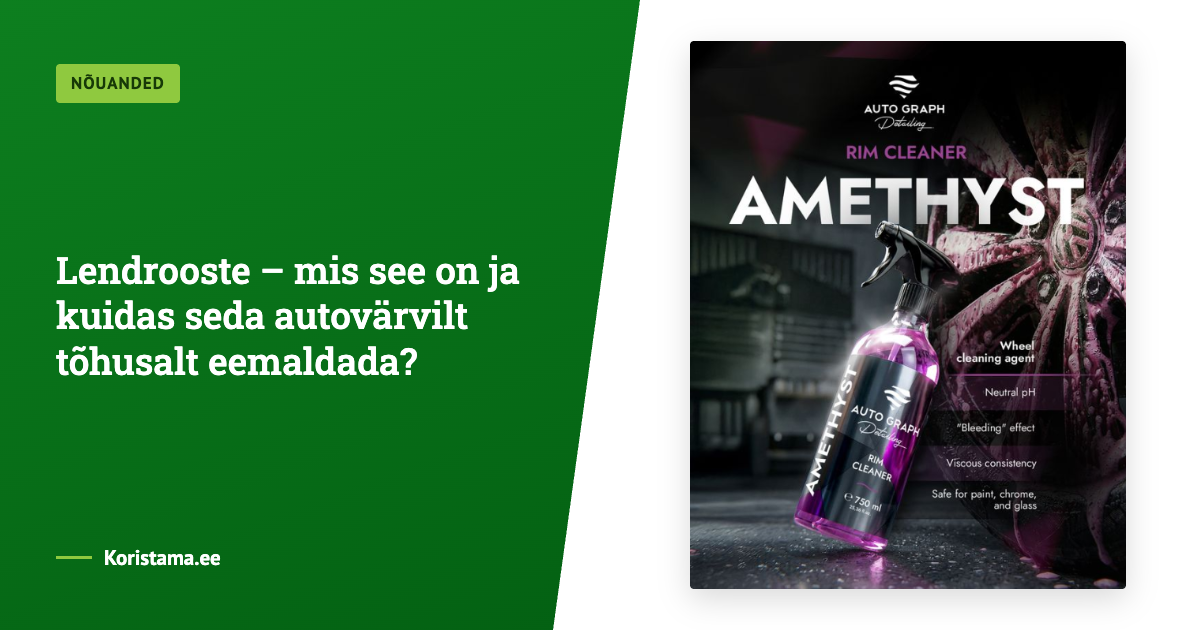
Always use pH-neutral products that do not damage the paint or any applied protective coatings. An excellent solution is AMETHYST rim cleaner. It is an extremely effective pH-neutral product that is completely safe on paint, wheels, plastic, chrome, and glass. Its increased viscosity allows it to cling to the cleaned surface longer, which boosts its effectiveness. Plus, unlike many competing iron removers, this product does not have a rotten-egg smell.
How to Decontaminate Paint Step by Step
Always work in a shaded area. Before you begin applying, make sure the paintwork and brake system have cooled down completely. This prevents the chemicals from drying prematurely on the body.
- Pre-wash: Remove loose dirt from the car’s surface so the chemicals can work more effectively. Use professional car wash products, such as CARNELIAN thick snow foam. Before the iron decontamination, also remove tar and asphalt so the product has direct access to the metal particles. If the car has very stubborn greasy dirt, use a versatile APC such as AMBER.
- Applying the iron remover: Apply AMETHYST evenly to the body panels and wheels. Focus especially on thoroughly decontaminating the wheels, since that is where the most brake pad dust accumulates.
- Dwell time: Leave the product on the surface for 1–3 minutes. Watch the chemical reaction and the bleeding effect. Never let the product dry.
- Rinsing and a proper wash: Rinse the car thoroughly with clean high-pressure water. Then wash the body by hand using TOURMALINE, a completely safe, neutral car shampoo.
When Is a Clay Treatment Necessary to Remove Metal Deposits?
Chemical iron decontamination is not always enough to remove the most deeply embedded particles. If the paintwork still feels rough after washing, use a clay bar treatment, a proven mechanical method.
This process involves carefully rubbing the paint with a special detailing clay. Always use it with a suitable lubricant to remove metal particles safely without scratching the surface. After a proper clay treatment, the paint regains its perfect smoothness. However, this treatment can leave light marring on the surface, so it often needs a gentle polish. Once the correction is done, use AVENTURINE IPA cleaner to degrease the surface perfectly and safely remove polishing compound residue.
How to Protect Your Car from Corrosion
The best prevention is regular washing and physically isolating the paintwork from the outside environment. Protective coatings create a tight barrier that drastically reduces how many new metal particles stick and makes them easier to wash off later. High-quality paint protection products also act as corrosion inhibitors and support metal passivation.
An effective and extremely quick-to-apply solution for protecting the body is SAPPHIRE ceramic spray coating. Thanks to its high SiO2 polymer content, this product creates a hydrophobic layer on the paint that repels water and significantly reduces the buildup of road grime. It also delivers the desirable “wet look” effect, giving the surface exceptional depth of color and a glassy gloss that lasts up to several months. Thanks to its ease of use, this product works like an advanced quick detailer that instantly protects bare paint, and it is also great for the ongoing maintenance of ceramic coatings and for extending their lifespan.
Recommended Products
View all products: Car Detailing, Car Wheels. You can find the safety data sheet (SDS) and product data sheet for every cleaning product on our safety data sheets page.
